Take the Next Step
The consequences of comfort are insidious and can have exponential impacts on our lives
For a long time, I assumed that comfort was the point.
Not in an obvious or indulgent way, but in the quiet, respectable sense. Work hard so life can get easier. Build margin so there’s more freedom to choose. Reach a stage where fewer things are demanded and more things are optional. Comfort, in that framing, isn’t laziness—it’s the reward for effort.
That idea is so normal it rarely gets questioned by most people. We talk about wanting enough money to be comfortable, enough time to slow down, enough flexibility to do what we want when we want. Even rest is often described in terms of escape: getting away, shutting things off, being left alone.

What I’ve noticed, though – slowly, and not without struggle – is that comfort and contentment are not the same thing. In fact, many of the seasons where I’ve felt most settled, most alive, or most at peace have not been seasons of ease at all. They’ve been seasons of movement. Of progress. Of working toward something that mattered, much of the time, I was very uncomfortable in the moment, actually.
Oddly enough, I’ve found that anticipation often carries more satisfaction than arrival. The work toward a goal can feel richer than the moment you finally achieve it. Comfort promises relief, but movement delivers meaning.
That tension—between what we assume will satisfy us and what actually seems to—is where we begin.
Defining Terms
Part of the difficulty is that comfort gets tangled up with other ideas that matter.
Rest matters. Waiting matters. There are seasons where stopping is wise, necessary, even faithful. Scripture is clear that waiting on God is not passivity. It can be costly, disciplined, and full of trust. There’s no denying it’s hard.
That’s not what I’m talking about here.
What I’m trying to identify is something much different: choosing inaction when action is needed—or when action would be better. Not waiting with purpose, but drifting without intention. Not resting to recover, but avoiding movement because movement feels inconvenient, disruptive, or overwhelming.
Inaction often feels neutral. It doesn’t announce itself as a choice. It feels like postponement, or prudence, or simply not rushing. But inaction is still a decision. It just hands the steering wheel to someone or something else.
The Cost of Not Deciding
One of the phrases that was drilled into us during my Air Force training was simple and uncomfortable: no decision IS a decision.
At the time, it felt harsh. Surely there are moments when withholding a decision is the wise thing to do. And there are. But what that phrase was meant to expose is the illusion that refusing to decide keeps us neutral. It doesn’t. It simply allows circumstances, habits, or external pressures to decide for us. Remembering that phrase was supposed to bias us toward action—in spite of imperfect information.
Drift doesn’t require rebellion or bad intentions. It rarely involves dramatic failure. It happens when we stop choosing deliberately and let momentum take over. Life keeps moving, and we move with it, assuming that staying afloat is the same thing as going somewhere.
Comfort makes drift easy. When nothing hurts enough to demand change, there’s no urgency to act. When things are “fine,” it’s easy to assume they’ll stay that way. Drift doesn’t feel dangerous; it feels reasonable.
Until, slowly, it isn’t.
Comfort’s Hidden, Exponential Cost
The real danger of comfort is not that it feels good. It’s that it hides its cost.
The consequences of inaction are rarely immediate. They don’t show up as pain or crisis. They show up as erosion. What once felt possible begins to feel overwhelming. Not because the goal changed, but because my desire to move toward it weakened.
This isn’t cumulative in a simple, linear way. It’s actually exponential. The longer movement is delayed, the more effort it takes to begin. The range of motion shrinks. Responsiveness dulls. Willingness erodes—not all at once, but steadily.
What’s especially deceptive is that desire often remains intact. We still want the outcome. We still care. But wanting it and moving toward it slowly drift apart, until action feels outsized and intimidating compared to what it once was.
Comfort doesn’t just preserve the status quo. Over time, it trains us to stay where we are.
Getting Over the Hump
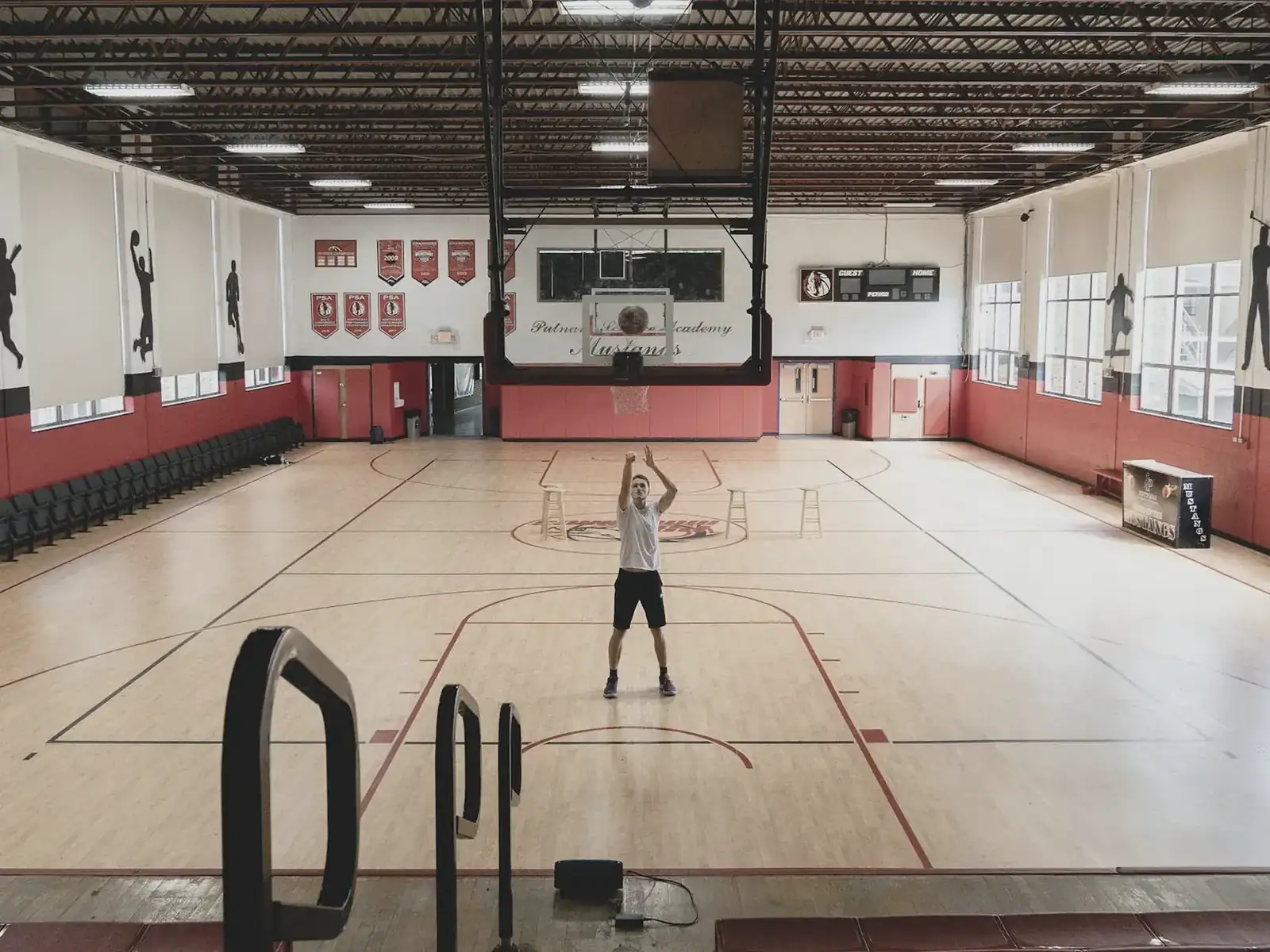
Athletes understand something here that applies far beyond sports.
There’s a difference between training occasionally, training seriously, and training professionally. It’s not a difference of interest or even desire. It’s a difference of focus and consistency. A casual athlete practices until they succeed. A professional practices until they cannot fail.
That distinction has very little to do with willpower in the moment. It has everything to do with what has been trained over time.
When action becomes habitual, motivation becomes less important. Movement generates momentum. Momentum reshapes how resistance feels. The hardest part of any activity is almost always the beginning, not because the task is hardest there, but because that’s where friction is highest.
Discipline, in this sense, isn’t brute force. It’s prioritization made visible. It’s arranging life so that action requires less negotiation. Structure replaces reliance on mood. Smaller, repeatable actions reduce friction and make progress tangible and inevitable.
This kind of training is not about earning worth or proving seriousness. For the Christian, identity is already secure. Union with Christ does not rise and fall with productivity or success. That foundation doesn’t move.
What does change is capacity.
Scripture uses training language deliberately. Paul speaks of athletes who discipline their bodies and soldiers who endure hardship. These metaphors aren’t about spiritual status; they’re about preparedness. Training forms responsiveness. It creates readiness under pressure. It enables action when conditions are uncertain and clarity is partial.
Consistency Beats Intensity
One of the reasons comfort is so persuasive is we tend to judge progress over much too short of a timeframe.
We overestimate what should change quickly and underestimate what steady movement can produce over years. When results don’t appear fast enough, it’s easy to assume the effort isn’t worth it. When outcomes are unclear, it’s tempting to wait for better information.
But progress doesn’t work that way. It’s not about predicting future demands or mapping every step in advance. It’s about faithfulness to the next step we need to take, even when we don’t know where it will lead us.
Small actions taken today give us motivation to take small actions again tomorrow. Small actions taken day after day compound exponentially over time. We may never see the full effect of what we’re doing. That doesn’t make the training and consistency any less important.
Movement now creates motivation later. Inaction now kills motivation later.
Faith Without Foresight
That dynamic comes into sharp focus in the story of Israel crossing the Jordan.
The river isn’t calm. It’s at flood stage. The moment is unstable, uncertain, and risky. And the instruction given is not comforting: the priests are to step forward first. They are to move before anything changes
The water doesn’t part in advance. There’s no visible assurance that it will. The step has to be taken while the river is still flowing.
Only after they move does the river open.
It’s a striking picture of faith that doesn’t depend on clarity. The priests don’t act because the outcome is obvious. They act because God is present. The trust is not in foresight, but in companionship.
The step comes first. The ground appears after.
That moment isn’t about courage as a feeling. It’s about the discipline to act based on faith even in uncertainty. The ability to do this didn’t appear suddenly. It was the result of a long history of walking with God, learning—imperfectly—to act in faith without full explanation.
Competing Trajectories
Every habit shapes us.
Whether we acknowledge it or not, patterns form our lives. Comfort and action are not neutral alternatives; they are competing trajectories. One trains us to stay still. The other trains us to move.
Drift doesn’t require our permission. Action does.
This isn’t a call to constant striving or perpetual restlessness. It’s simply an attempt to name what is already happening in my life. I’m either becoming more responsive, more practiced, more disciplined—or I am slowly becoming less so.
Faith doesn’t remove that tension. It keeps us company in it. It doesn’t promise clarity, only presence. And sometimes, the only faithful thing to do is step forward while the water is still moving, trusting that the ground will meet us in God’s timing instead of ours.
If you’d like to know when I post more articles,
please enter your e-mail below.
Most Recent Posts
-
Why I Was Working But Making No Progress (and What Fixed It)
The particular frustration of working all day and still feeling like nothing has moved.
-

Unseen Work to Build Families
Dedicated people make the world work, almost always in ways nobody sees.
-

Why Your ChatGPT Images Keep Getting Worse (and the Simple Fix That Changes Everything)
Your image is almost right and one more tweak makes it worse. Here’s how to break the cycle.
-

Living in Yesterday’s Provision
Are you already living inside answers to prayers you’ve long forgotten praying?
-

Living in Healthy Tension
What My Unraveling Life Taught Me About Stability, Health, and Relationships
-
What AI Actually Teaches You (That No One Mentions)
Just like anything worthwhile, learning to use AI takes effort, failure, and lots of time.