Unseen Work to Build Families
Dedicated people make the world work, almost always in ways nobody sees.
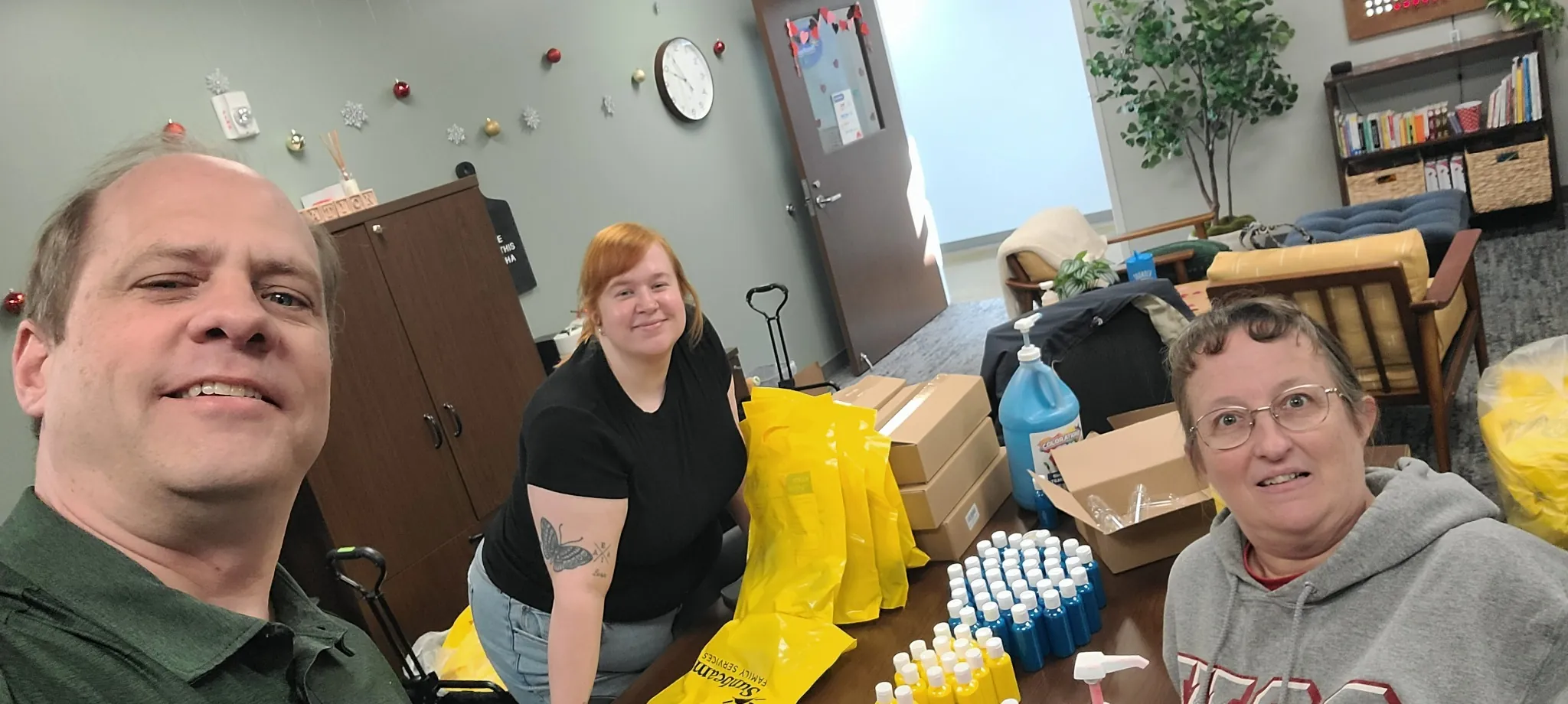
On a recent Friday morning, my wife and I went to Sunbeam Family Services in Oklahoma City, to help our daughter prepare materials for an art-focused STEAM (Science, Technology, Engineering, Arts, and Math) event she’s been coordinating. Sunbeam’s teachers had already spent weeks in their classrooms teaching about artists, creativity, and the artistic process.

What we were working on was simply the final step.
We squirted tempera paint from big bottles into little bottles so they could be put into take-home kits for hundreds of children and families.
From the outside, a culminating classroom event like this looks creative and celebratory. Children take home supplies.
Projects get made.
Pictures get shared.
What’s visible is color and enthusiasm. What’s less visible is the structure behind it. Programs and activities don’t run on inspiration alone. They run on preparation, sequencing, and careful coordination. The final event may be brief. The system that supports it isn’t. From coordinators, to teachers, to fund raisers and donors. They’re all essential.
The art kits aren’t isolated crafts. They’re bridges.
The students have been learning about art inside their structured classroom environments, but the take-home kits extend that learning into the home. Hundreds of children across Oklahoma City will open these materials at kitchen tables and living room floors.
They’ll measure paint. They’ll experiment with proportions. They’ll mix colors, make mistakes, and try again.
What seemed simple in theory will require patience in practice.
The design isn’t only about the child, though. It’s about the household. When a student brings home an art kit connected to what they’ve been studying, a parent or caregiver gets a window into that experience. The question shifts from “What did you do today?” to “Show me.”
But it doesn’t stop there.
The adult at the table doesn’t remain an observer. They become a participant.
They measure alongside their child. They mix colors. They suggest adjustments. They share memories of projects they’ve done, mistakes they’ve made, things they’ve learned over time.
The kitchen table becomes a place where experience and curiosity meet.
Learning becomes shared rather than contained. The weeks of instruction don’t stop at the school doors. They cross contexts.
What began as structured classroom exploration becomes something shaped by family history, conversation, and lived experience.
That’s what stayed with me. Community impact often looks inspirational in its finished form, but it’s built on steadier things.
Thoughtful systems. Repetition. Quiet coordination. When it works well, the structure fades into the background and growth comes forward.
Sunbeam Family Services has been doing this kind of work in Oklahoma City for a long time. The STEAM programming is visible in classrooms, but its strength is in how intentionally it connects learning to home life.
It gives children space to practice, to struggle a little, to solve problems, and involve someone at home in what they’re discovering. It isn’t dramatic. It isn’t loud. But it’s often where the real work begins and the lasting work compounds.
If you’d like to know when I post more articles,
please enter your e-mail below.
Most Recent Posts
-

Why I Was Working But Making No Progress (and What Fixed It)
The particular frustration of working all day and still feeling like nothing has moved.
-
Unseen Work to Build Families
Dedicated people make the world work, almost always in ways nobody sees.
-

Why Your ChatGPT Images Keep Getting Worse (and the Simple Fix That Changes Everything)
Your image is almost right and one more tweak makes it worse. Here’s how to break the cycle.
-

Living in Yesterday’s Provision
Are you already living inside answers to prayers you’ve long forgotten praying?
-

Living in Healthy Tension
What My Unraveling Life Taught Me About Stability, Health, and Relationships
-

What AI Actually Teaches You (That No One Mentions)
Just like anything worthwhile, learning to use AI takes effort, failure, and lots of time.